
Guest Post
Tennis looks straightforward at first glance. Two players meet on a lawn—sometimes hard—court and use their rackets to hit a bright, fuzzy ball back and forth to each other.
But beneath the elegance is purpose and psychological warfare. Every bounce, surface, and color is part of a mental puzzle that influences how players think, react, and perform.
Even gaming platforms with competitive titles, including those featuring GameZone exclusive games, often borrow from the psychological principles that tennis has already perfected for decades.
The deeper you look, the more tennis unravels itself as a sport built on mental endurance as much as physical skill.
Why Tennis Balls Are Green (Or Yellow)
So, why are tennis balls green? Or a bright yellow, perhaps?
Regardless of your persuasion, you’ve probably wondered if the color of tennis balls is simply an aesthetic choice or something more functional.
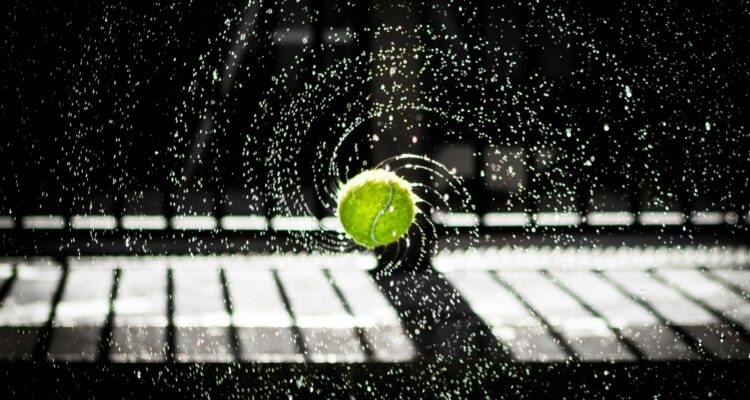
The official color of tennis balls is optic yellow. The shade was first introduced in the 1970s as a solution to the initial white balls looking ghostly against the court, barely visible on television screens.
Viewers strained their eyes, broadcasters complained, players hesitated, and eventually the International Tennis Federation stepped in.
Many people perceive them as green due to optic yellow having a greenish hue. Light and shadow also create the illusion of a neon green color instead of a yellow one.
The now-famous optic yellow was specifically chosen because it stands out most clearly to both the human eye and early broadcast cameras.
More importantly, the fuzzy yellow balls have a psychological influence. When a ball pops visually, players instinctively recognize trajectory, spin, and bounce.
A clearer target reduces uncertainty, which reduces anxiety, which improves performance.
In short, the color wasn’t chosen for aesthetics but for mental clarity: a player who sees the ball better can process the moment better.
Speed and efficiency are everything in a sport where decisions are made in milliseconds.
Who Decides Court Surfaces and Why They Matter
Grass, clay, and hard court: each one changes the game, and each has been chosen with deliberate reasoning behind it.
Tournaments might operate under their own traditions, but the playing surface isn’t just a historical artifact. It’s a strategic choice that shifts the mental landscape for every athlete who competes.
Hard courts, like those at the US Open and Australian Open, are considered the most neutral. They reward players who rely on timing and precision.
The bounce is predictable, letting athletes commit to bold decisions without second-guessing the surface beneath them.
Clay courts, on the other hand, crack open every psychological weak spot a player might have. Clay slows the ball, extends rallies, and demands patience nearly to the point of stubbornness.
On clay courts, impulsive players struggle and defensive players thrive. And that’s their beauty—clay exposes temperament as much as technique.
Grass, the most traditional surface, rewards fast reflexes and aggressive instincts. The ball stays low, skidding forward, pressuring players to shorten rallies and take risks.
On grass, a player’s confidence becomes a tangible weapon.
But who governs these court decisions?
It’s the tournament organizers, guided by historical identity, commercial considerations, and the governing bodies of tennis.
But whether intentionally or not, each choice shapes the mindset required for victory. The surface is as much a psychological challenge as it is a physical one.
How Court Aesthetics Influence Players’ Minds
Every part of the court design, from color to layout, is curated to control how players think and how viewers engage.
For example, the blue hard courts used in many major tournaments weren’t selected randomly. Blue creates the highest contrast with the yellow-green ball, making it easier for both players and spectators to track movement.
Visual strain decreases, stabilizing players’ focus over long matches.
In fact, even the seating layout in stadiums influences psychology. Crowds positioned closer to the baseline can create a more intense atmosphere, while deeper seating gives players a greater sense of visual space and calm.
The way sound echoes in enclosed courts affects emotional momentum. A loud crowd can either energize or overwhelm, and tournament designers know this well.
Rituals, Routines, and Mental Anchors
Tennis players are famous for quirky rituals. Some bounce the ball precisely five times before a serve. Others refuse to step on the court lines during changeovers.
These behaviors aren’t superstition so much as psychological stabilizers. Under stress, routine becomes a grounding mechanism.
It helps players reset, regain control, and focus on the next point instead of spiraling into mental clutter.
The sport rewards mental discipline in a way few others do. There are no teammates to bail you out, no coach shouting from the sidelines.
Each point is a micro-battle of nerves, and the tools players use to manage pressure often become as iconic as their forehand.
Tennis as a Study of Human Behavior
At its core, tennis is a test of self-management. The color of the ball, the texture of the court, the traditions of tournaments, and the routines players cling to: everything funnels into the psyche.
The sport creates a controlled environment that exposes how a person responds under pressure, adapts to uncertainty, and handles both chaos and calm.
This is why tennis continues to fascinate both casual viewers and sports psychologists alike. The game is a blueprint of human decision-making, recorded point by point in real time.
Tennis isn’t just played on a court. It’s played in the mind. And the more you understand the invisible layers shaping every rally, the more compelling the sport becomes.